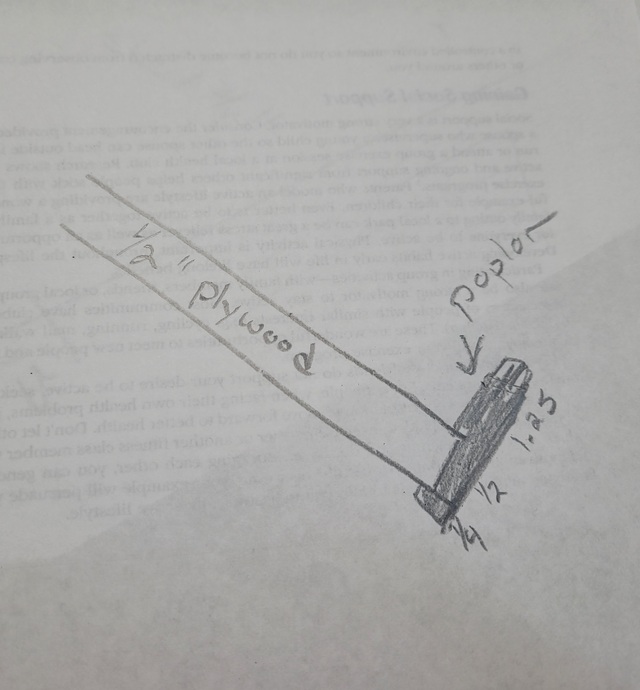
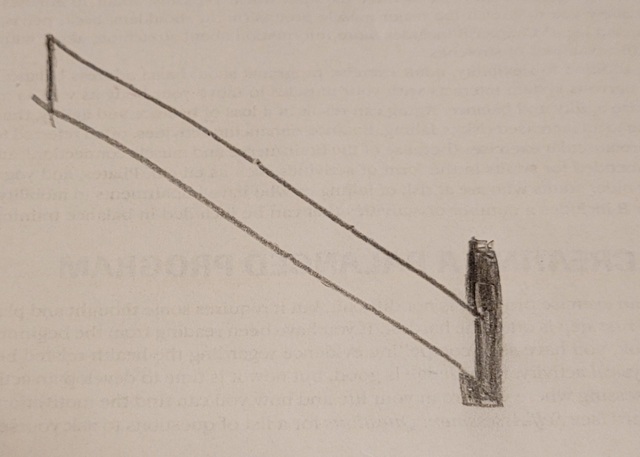
I'm working on a design for shoe storage for a friend. Not sure if we will go with this route, but if I angle 1/2 inch plywood shelves, how would I create a snug fitting face board? Attempted drawing what I mean...
Barb, you are going to be a Pro at angles once done. Your flag case, now this. :-)
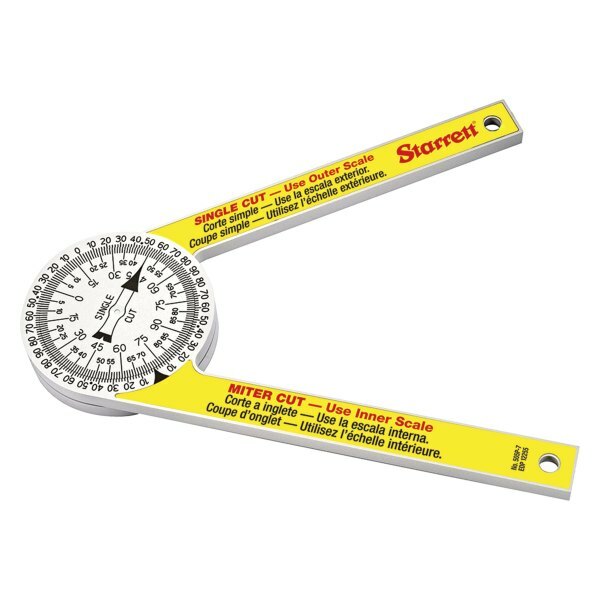
When I am not sure of an angle, I'll often use paper or cardboard to make pieces I can move around to get the look I want. Then I'll use an angle finder gauge, there are many types on the market, I like these.
Let us know what else you need. Seeing it in your head is the hardest part sometimes. Being able to see into yours to understand which part you don't understand is the hardest part for us.
Here the "my head" part - I typically do dados with multiple cuts on my table saw, sneaking up on the fit. I don't see how I could do this with an angled blade...well, maybe if I cut the plywood at 45 (so not quite like Bentlyj's diagram).
I'll typically do what Bently first proposes, just angle the dado set in the TS and cut. There is the issue of watching the thin area at the point as to not make a weak area.
Bumping up/down a narrow blade as you move over to get the width will leave a rough bottom, but a chisel can take care of squaring it up (a lot of work) Alternatively you can just do the cut, then using some scraps of the poplar, bevel the edge to match your shelf angle then rip cut it off to make a fill strip to angle the dado cut, glue into the cut and you'll have your flat.
Ditto. Set the dado width, set the angle, then make some test cuts on cutoffs and double check it’s what you want.
Alternately, you could follow your original plan with a single width blade, cutting the full dado, then roughly clean up the bottom with a chisel. After glue up go back and band the edges and you’ll never see it. More steps, a different look, but another way to skin it…
Ryan/// ~sigh~ I blew up another bowl. Moke told me "I made the inside bigger than the outside".
Hopefully we are going a different route as this seems daunting. I haven't ever angled a dado set (and to be honest, have not had my dado blades in use for 5 years or so!) so would likely need to do splintergroup's second option. Simple projects are never simple.
Also, this is all getting painted so that impacts some aspects (potentially).
Bentlyj - your signature line is so you! Thank you for that added option. I really need to learn "design software" as I tend to sketch out my thoughts on scrap paper, or when I get serious, I use graph paper. The former in particular often presents me with "learning opportunities"
Corelz125 - painting definitely changes things. It appears they may want to do a design where the shelves angle down toward the back so no front lip will be needed. We are going to keep a little space between the shelves and back to avoid dirt, etc getting trapped.
Bentlyj- I think I have avoided learning SU due to wanting to avoid more "computer time" in my hobby. I'm at my desk a lot for work related stuff and when it comes to my recreation (woodworking is that for me), I want to be in my little shop. I know I would be more productive, more efficient, etc. but my brain hasn't gotten my heart to give SU a try. Maybe it's time to see how it would impact my experience.
Even a simple 2-D drafting program can help. I often use one to draw some aspect of a project like Bently did just to get dimensions and angles. My lamp shades are a prime example.
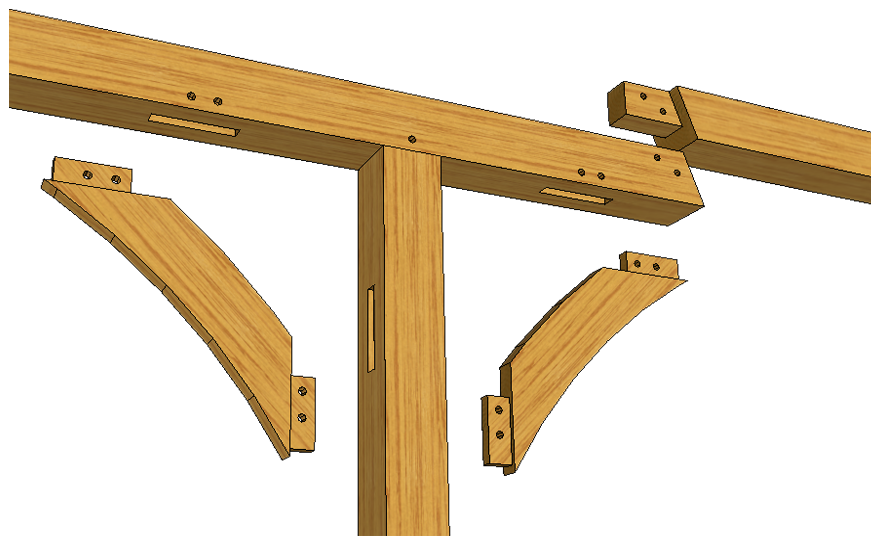
It's pretty much just a knee brace, so you can take all of the angles out of the mortice and just cut the tenon at the right angle to give you a simple to cut joint.