






Share your craft projects
Make new craft buddies
Ask craft questions
Blog your craft journey
Craftisian Blogs
view blog series
Recently I viewed a project by "hairy" called Chum Bucket. I thought this project was a quite unusual but an interesting project. I liked it, so I ...


[spongebob 4 years later.jpg]
It's been 4 years since I built the 1:6 scale model of the "Dolphin" chair by Hans Wegner. Back then, I didn't hav...

The original design had a notch on the front leg under the seat that was a stop for the folding chair. Since that notch would serve no purpose in...


Another wood project for the truck is a wood floor for the bed. I want to have straps and planks much like the bed floors of older trucks, but with...

Rather than drag the 4" hose around from machine to machine for my Oneida Supercell I decided to install a 4" PVC dust collection system. The 4" h...





Boys and Girls,
As I grow older, my memory barely remembers where I put down my cask-o-vino,
[LBD_Old, glassed toothed.png]
let alone what mea...

Cutting Blanks – Installment No 2
After selection, co-ordination with the Pen Kit, and getting the drill bit..bushings and Instructions, it is ti...

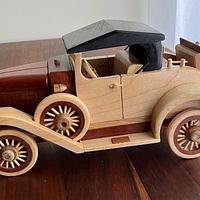
About three years ago I bought myself a set of plans for the 1951 Ford Pick up from Toys and Joys. The plans sat untouched for a long while. In Sep...

[IMG_2514.JPG]
This photo shows the bumper and a good clear view of the tray in the back of the pick up. Stay tuned and I'll provide more photos a...

So after weeks and weeks of construction work I commenced staining.
Two years ago I read a very interesting book on timber finishes. One of the a...
