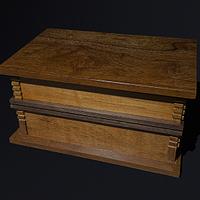
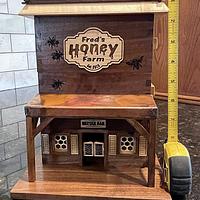
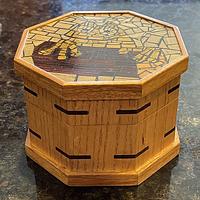
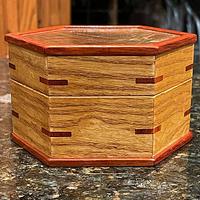
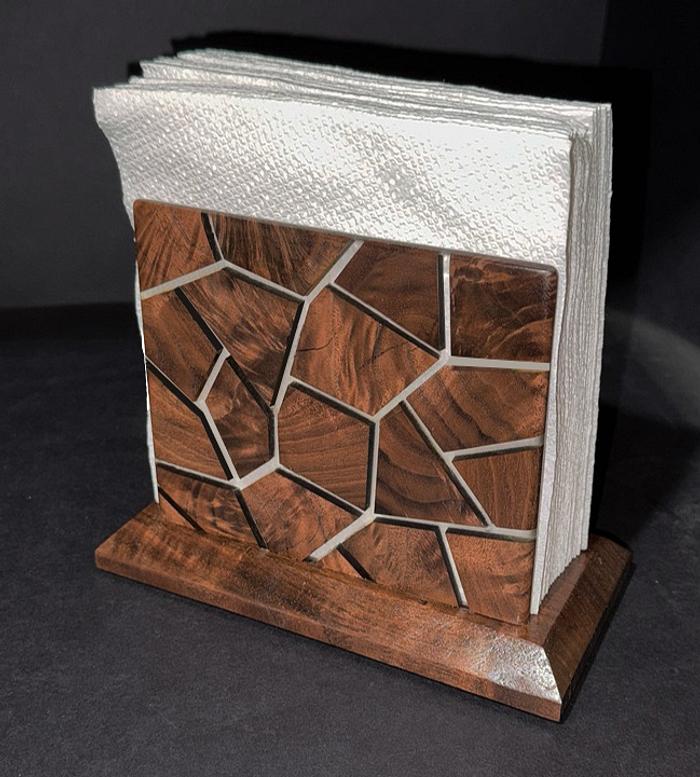
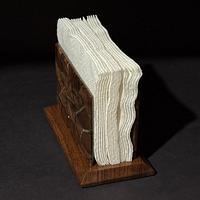
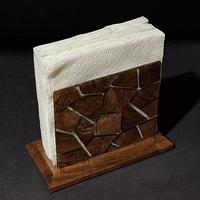
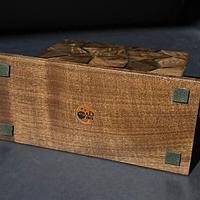
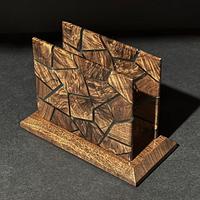
I had this highly figured piece of walnut sitting on a shelf for at least 25 years, it was about 3/4” thick and had cracks everywhere, but was so beautiful I couldn’t throw it away. I've been looking for a project where I could use this amazing piece of wood, and I finally found a use for it. I saw a similar design on line and knew this was something this walnut was perfect for. I cut out most of the cracks and I was able to get just enough walnut to make this piece. I made the panel 5”x6” and then re-sawed it in half. I was able to get them a little more than 1/4” after sanding everything smooth. I mortised the base to hold the sides. I used OSMO for a finish, but the figured walnut didn’t pop like I had hoped. I then sprayed it with semi-gloss and the figure popped big time.
In hindsight I should have glued down the individual pieces better because a few shifted and messed up the spacing. I took several pics and it is hard to get an accurate picture as far as color goes. The last picture is shot with a flash and it looks fake. The others are without a flash and is much closer to what it looks like in person. They look completely different, the flash made the picture look strange because the figure is so exaggerated. I had to post it because I've never seen this happen. My wife loves it, so I’m happy.
First, let me apologize for the “post and run.” It was late, and then I forgot I had posted it.
Thanks to everyone for the kind comments. I’m sorry I didn’t include more details. Yes, this was a pour.
The first thing I did was design everything in Illustrator because I wanted all the channels to be even. I printed the design, cut out the individual paper pieces, and arranged them on the wood until everything looked right. After cutting the pieces, I sanded the edges smooth.
Next, I built a box for the panels out of MDF and wrapped it with Tuck tape. I milled some additional wood down to 3.5 mm thick and cut it into small pieces about 10 mm long. These acted as spacers, keeping every piece evenly separated and slightly below the walnut surface.
To hold everything in place, I used spray adhesive on a sheet of paper cut to the exact size of the box. I placed the paper onto the walnut layout, then flipped everything upside down. That kept all the pieces aligned so I could remove the spacers. In hindsight, this is probably where I made a mistake, as each piece should have been secured more firmly.
With the paper side down, I set everything into the box and poured the epoxy.
It took a long time to cure, likely because my basement stays around 63–65°F, while the instructions recommend 75–85°F for the first 12 hours. I ended up using a heating mat that my son had for a bearded dragon that is no longer with us.
Once it cured, I ran the piece through my drum sander until I reached the walnut. Then I re-sawed it in half and sent both pieces through the sander again. After that, I hand-sanded everything to soften the edges.
To join the panels to the base, I cut a tongue on the table saw using the fence. This left me with a thickness I didn’t have a router bit for, and I didn’t want to make the tongue any thinner. Instead, I made a jig using two scrap pieces of wood with the correct size drill bit between them, secured to the base with double-stick tape. I used the drill press to drill a series of holes along the channel between the scraps, then cleaned it up with a chisel.
Finally, I used five-minute epoxy to glue the panels into the base.
I’d rather use that special piece of wood, even if I risk making a mistake and ruining it. That feels better than letting it sit unused or eventually get thrown away when I’m no longer around.
That's Wild! I like it. I have a plank of walnut that has wild figure in it that I want to make a gunstock out of. I've had it about 15 years. Probably ought to get started...
In the second pic, there’s a view of the inner piece—it’s 1/8” or 3/32” and most likely acrylic or lexan. I would guess the walnut is glued to it using contact cement. A two part epoxy would work as well.
First, let me apologize for the “post and run.” It was late, and then I forgot I had posted it.
Thanks to everyone for the kind comments. I’m sorry I didn’t include more details. Yes, this was a pour.
The first thing I did was design everything in Illustrator because I wanted all the channels to be even. I printed the design, cut out the individual paper pieces, and arranged them on the wood until everything looked right. After cutting the pieces, I sanded the edges smooth.
Next, I built a box for the panels out of MDF and wrapped it with Tuck tape. I milled some additional wood down to 3.5 mm thick and cut it into small pieces about 10 mm long. These acted as spacers, keeping every piece evenly separated and slightly below the walnut surface.
To hold everything in place, I used spray adhesive on a sheet of paper cut to the exact size of the box. I placed the paper onto the walnut layout, then flipped everything upside down. That kept all the pieces aligned so I could remove the spacers. In hindsight, this is probably where I made a mistake, as each piece should have been secured more firmly.
With the paper side down, I set everything into the box and poured the epoxy.
It took a long time to cure, likely because my basement stays around 63–65°F, while the instructions recommend 75–85°F for the first 12 hours. I ended up using a heating mat that my son had for a bearded dragon that is no longer with us.
Once it cured, I ran the piece through my drum sander until I reached the walnut. Then I re-sawed it in half and sent both pieces through the sander again. After that, I hand-sanded everything to soften the edges.
To join the panels to the base, I cut a tongue on the table saw using the fence. This left me with a thickness I didn’t have a router bit for, and I didn’t want to make the tongue any thinner. Instead, I made a jig using two scrap pieces of wood with the correct size drill bit between them, secured to the base with double-stick tape. I used the drill press to drill a series of holes along the channel between the scraps, then cleaned it up with a chisel.
Finally, I used five-minute epoxy to glue the panels into the base.
I’d rather use that special piece of wood, even if I risk making a mistake and ruining it. That feels better than letting it sit unused or eventually get thrown away when I’m no longer around.